Last month in Munich, I saw the first glimpse of a robotics system for print that can scale. Not on a trade fair stand. In a hackathon hall, built in six days by people who had never worked in print. Here is how it happened.
Friday, 23 October, 9:00.
Nothing stood yet. Tables, cables, robot arms still wrapped in foam. Pretzels on the counter. This is Munich, after all. About a hundred people with laptops and not enough coffee. They call themselves hackers. Almost none of them had ever seen an industrial digital printing press before.
I had ten minutes to change that. My first slide showed one of our presses, a P5 SMP, and asked a single question: What is this? One answer from the crowd: a giant industrial dryer. Not that far off, to be fair.
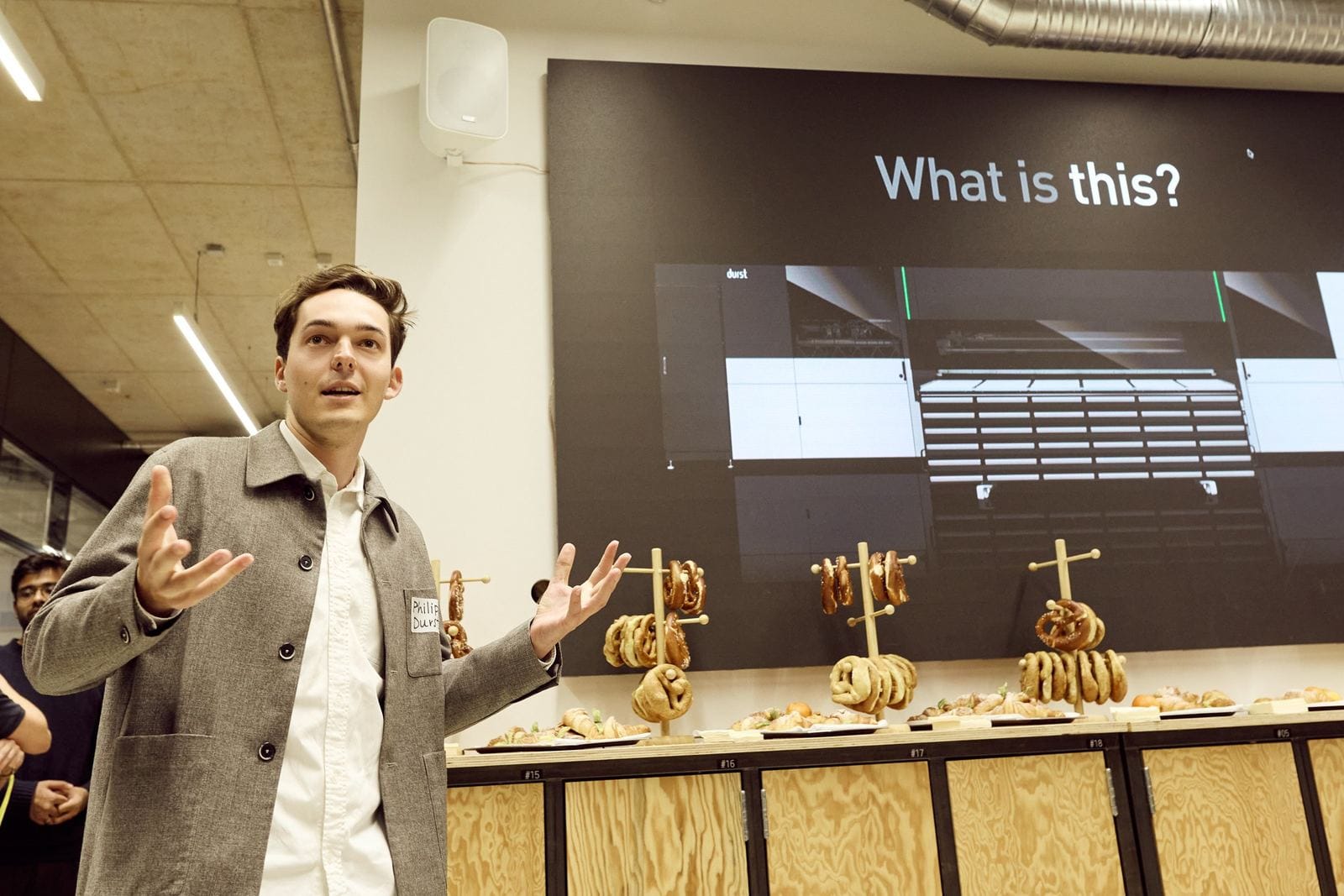
The enthusiasm was polite. Substrate handling is nobody’s dream before the second coffee. But the problem landed. You could tell by the questions afterwards. Six days later, a team working on our challenge would stand on stage with the Grand Prize.
A puzzle nobody had shown them
Anyone in print knows the picture. A press worth as much as a house, and next to it a person feeding it by hand, shift after shift. More than 95 % of digital printers still run this way. Every job is different, so a robot cell that only knows one move takes years to pay off, if it makes sense at all.
For our industry, that is old news. For a room full of robotics engineers, it was a brand-new puzzle. Nobody had ever put it in front of them. They were shocked when I told them how many presses are out there, and how few of them are automated.
Bringing this puzzle to Munich was no accident. Innovation rarely comes from looking inward. So we look outward, on purpose. Munich has the best robotics and AI ecosystem in Europe and some of the strongest robotics talent in the world. That is where the future of robotics is built, and we want to be part of it. It is also why we opened the Durst Munich Studio.
We became a partner of TUM Venture Labs Robotics/AI, the first company from print ever to do so. Their hackathon, robo.innovate, is one of the things that grew out of that partnership.
Six days, eight tracks, a hundred hackers. If you have never been to a hackathon, picture founding a start-up on a Friday and pitching a working product to a jury the following Wednesday. No roadmap, no budget meetings, no second attempt. Real hardware, a real problem, and a clock that never stops.
Neura Robotics, Universal Robots and Franka set challenges too, the big names of European robotics. They build robots. Ours was one of the few challenges that came straight from industry. Track 4, “Adaptive Industrial Vision”, asked for a robot setup for the print shop that is intelligent, affordable, flexible and robust. One that sees what is in front of it, adapts, and recovers when something goes wrong.
Two teams took it on, independently of each other. Both built something worth seeing. Today I want to tell the story of one of them: Team 4B, four incredible people from TUM, ETH Zurich and HEC Paris.
The work begins
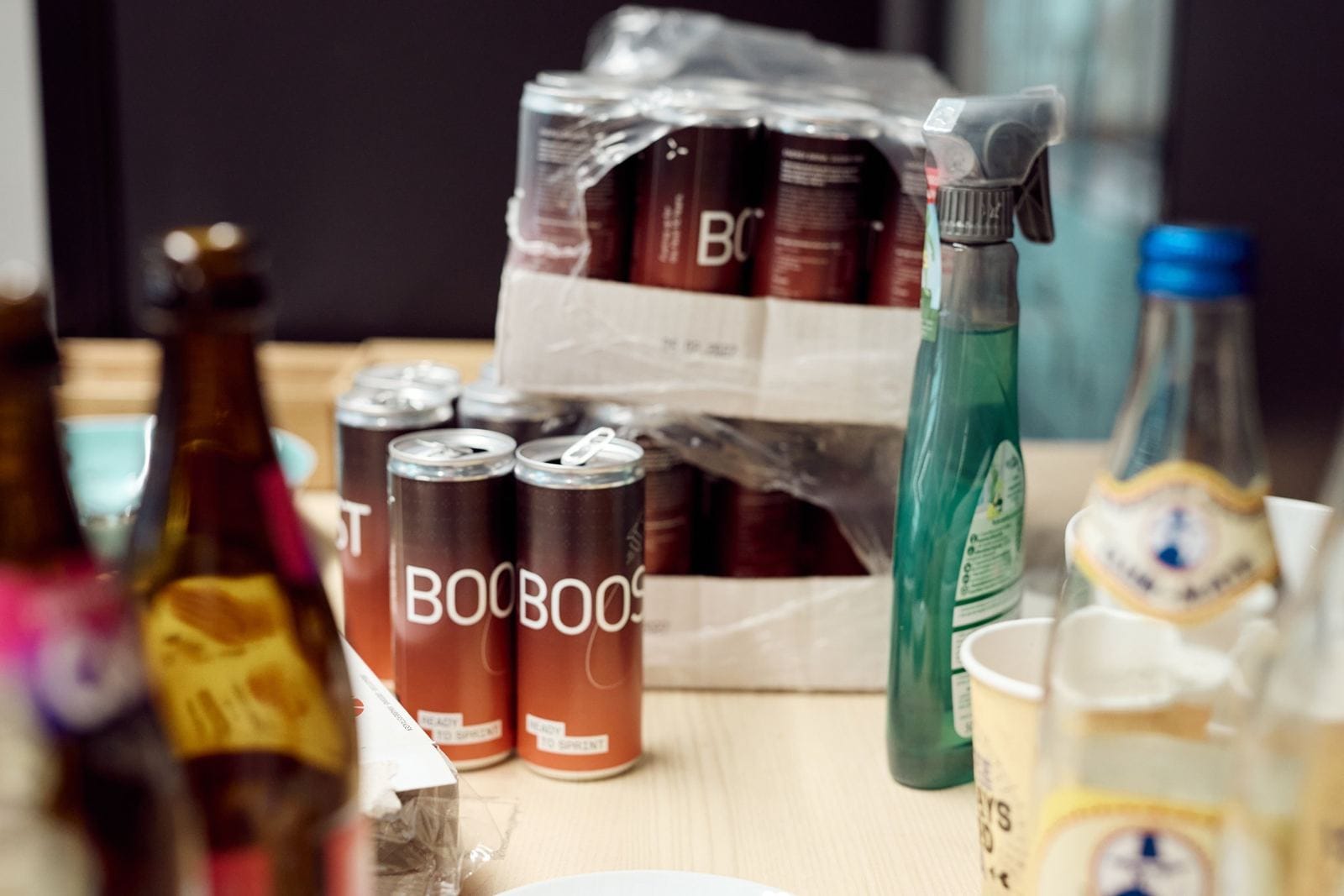
Over the next six days the hall changed. Robot arms wrapped in yellow tape. An ordinary webcam, the kind you use for video calls, mounted above a table. 3D-printed parts going from printer to robot while still warm. Energy drinks (actually our own Kyveris drink!) stacked by the case. Test, fail, adjust, test again. Euphoria at midnight, despair at three in the morning, and back again. Straight through the weekend.
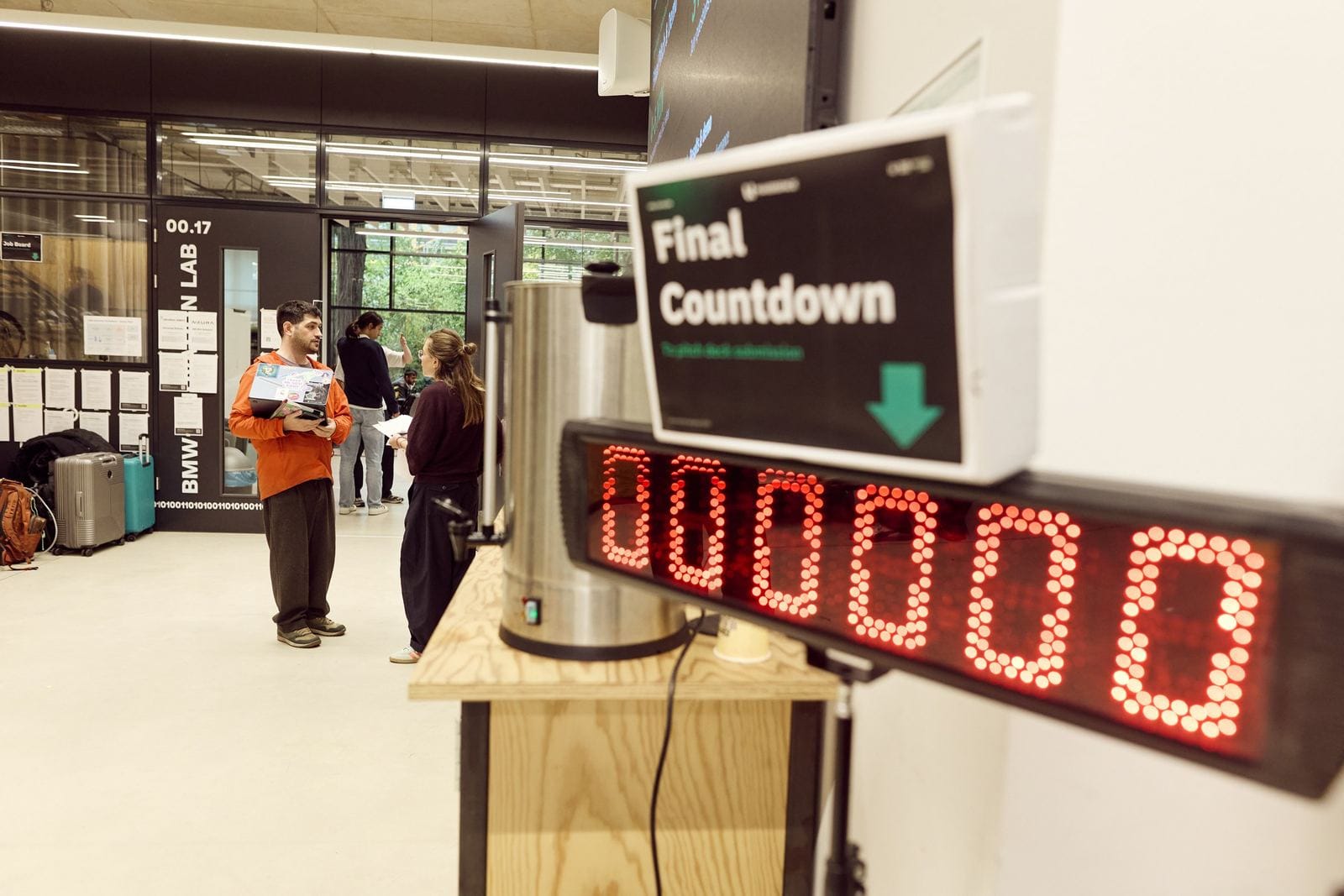
On 28 October, the countdown hit zero.
Meet smart stack
Dzmitry Koniukhau (Robot Learning), Johannes Mietz (Business and Product), Peter Schmitt (Control and Mechatronics) and Maximilian Stahl (Computer Vision) called their answer smart stack. We had asked for intelligent, affordable, flexible and robust. Here is what we got.
smart stack in action: destacking to the press, taking printed substrates back, slowing down for a hand, recovering from a failed grip.
Intelligent. A webcam above the table recognises every substrate by itself: size, position, rotation. Nothing is hard-coded. The arm’s route is not programmed in advance either. smart stack knows where to pick up and where to deliver, and plans the path on the fly. The operator can even talk to it: a conversational AI layer answers questions like how many jobs it has moved today.
Robust. If something is in the way, the arm goes around it. If a grip fails, it notices and tries again. Mistakes do not stop the line. The system recovers from them.
Flexible. Standard suction grippers are built for one narrow size range: too big for small substrates, too small for large ones. Team 4B built a working prototype of an adaptive gripper that covers a far wider range. It is the part we are most excited about. More on that once it has grown up.
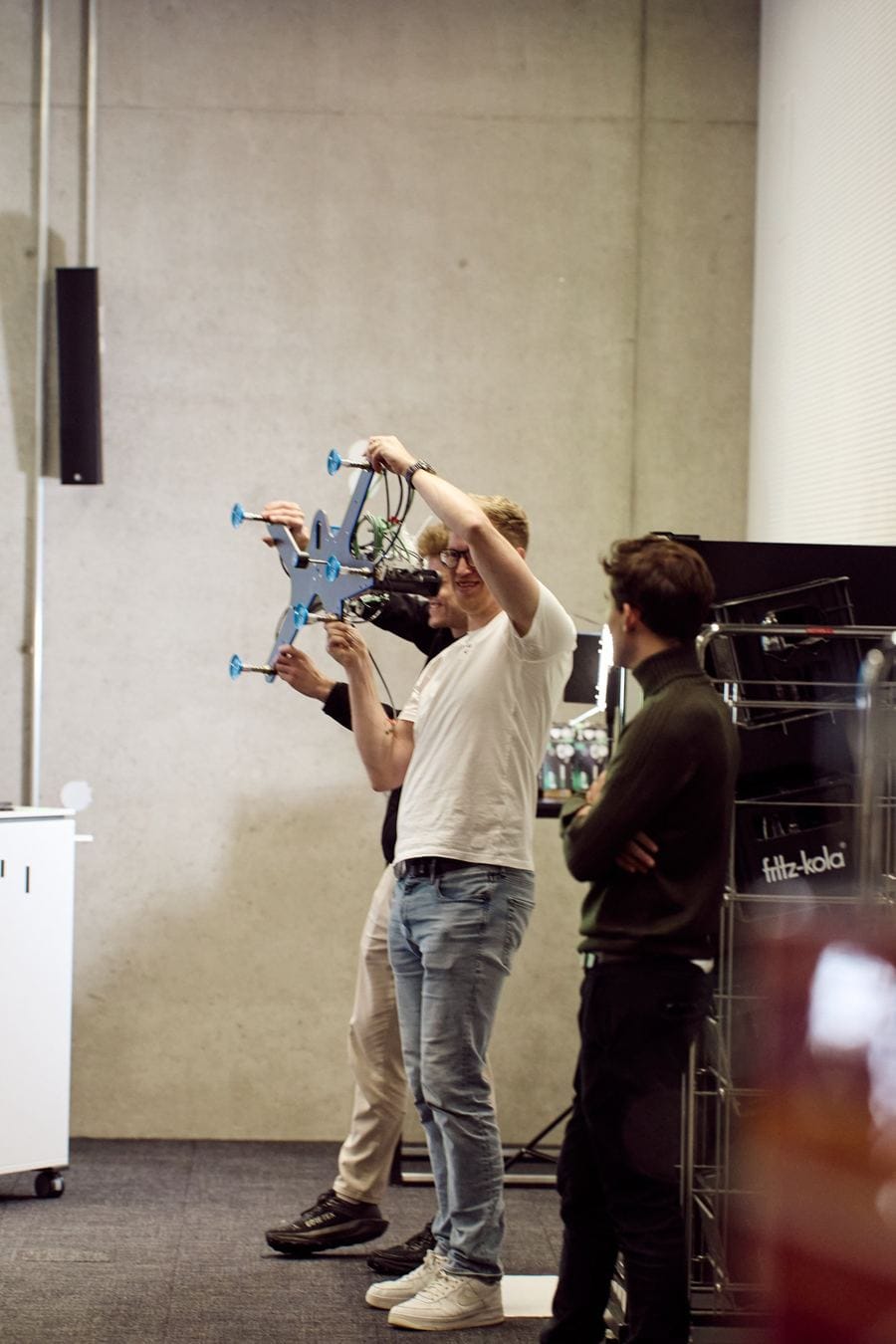
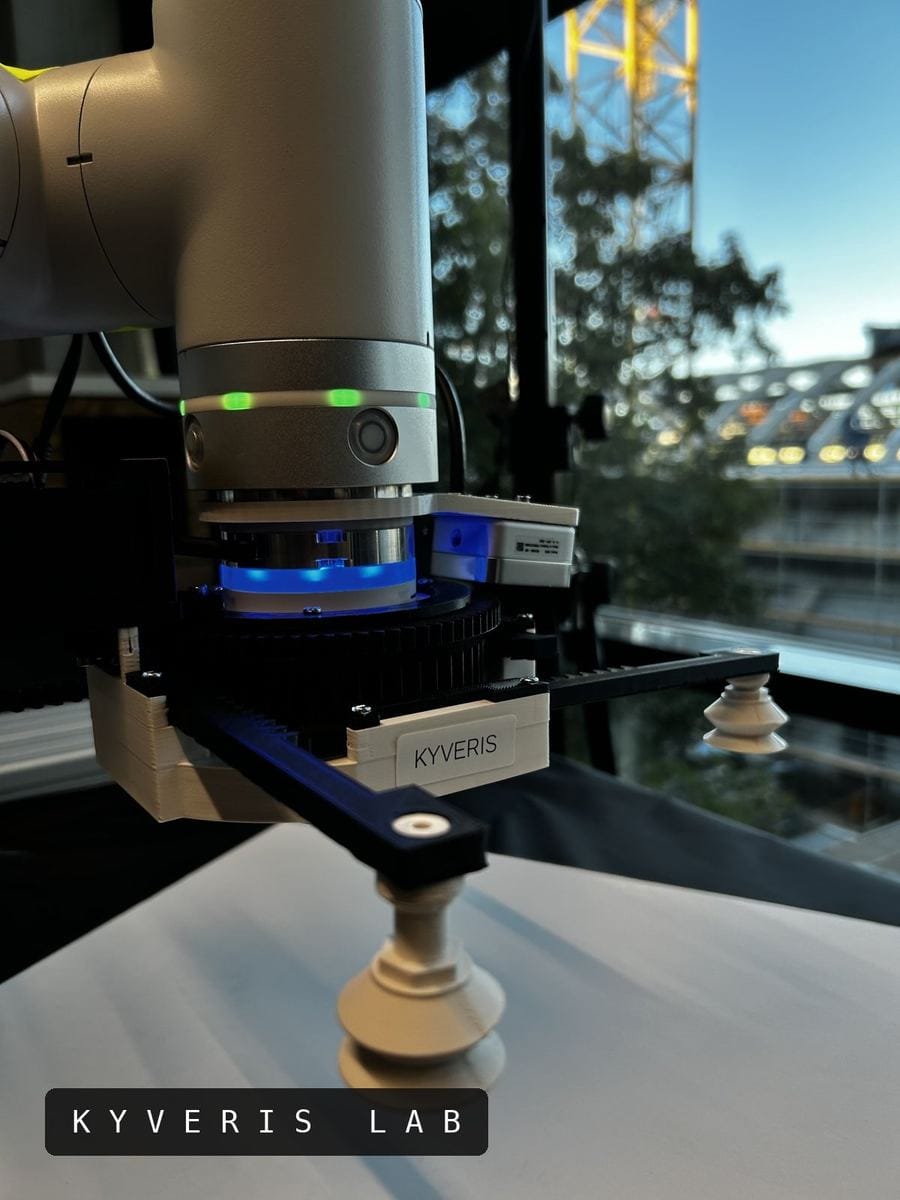
Left: a standard suction gripper, built for one size. Right: Team 4B’s adaptive gripper at work, phone shot from the Kyveris Lab.
Safe next to people. smart stack runs on a cobot, a collaborative robot built to share the workspace with humans. No fence, no cage. When a hand comes close, the robot slows down by 75 %. Say stop, and it stops.
Agnostic. The software runs on any cobot and serves any printer. A digital shadow mirrors the real robot live in 3D. The operator starts a job on a tablet: “Start cell 1?” Yes.
Affordable. An off-the-shelf cobot and a webcam instead of a custom robot cell. That is why smart stack pays for itself in quarters, not years.
And it works. The team ran smart stack 500 times on the real robot. In 497 runs it recognised the substrate correctly and acted on it correctly. 99 %.
It is a lab number, measured on paper. A production floor is harder. But it is the right number to start from.
One operator. Four machines.
That is the impact, and it is what convinced the jury. Today every press needs its own person. With smart stack, one operator can run four. The robot does the loading and unloading. The operator refills ink and substrates, checks quality and keeps the line moving. The person stays. The lifting goes.
We won the Grand Prize
Six days of work. A weekend without much sleep. A rollercoaster of emotions, right up to the last minute.
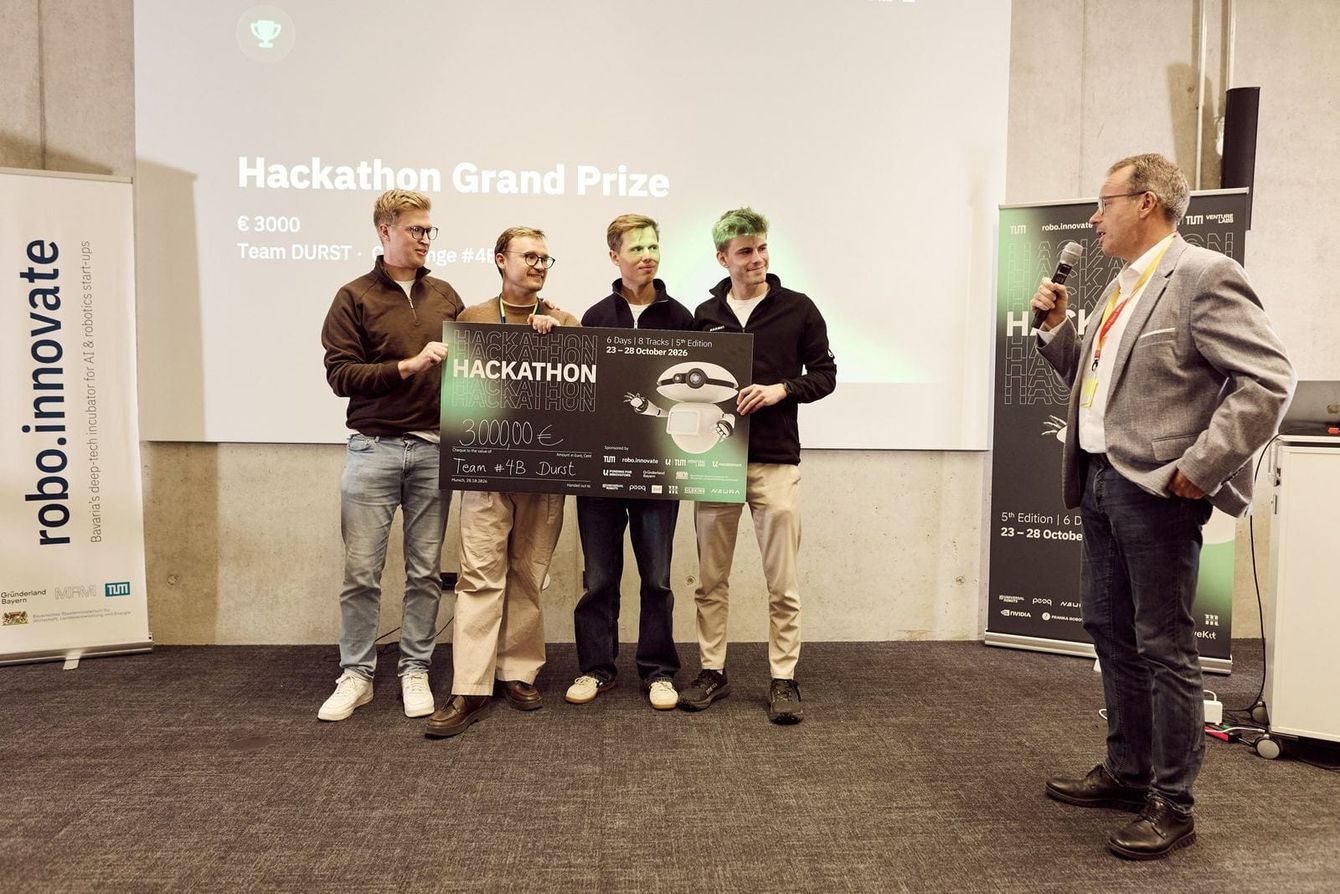
Then the jury, people from science, industry and AI, announced the Grand Prize of robo.innovate, across all eight tracks. The screen read: Team DURST, Challenge 4B.
I am damn proud of this team. At the start, I did not really believe in a win. Then you watch the pieces come together, and you start to hope. But actually winning is a different feeling altogether. I say that as the sponsor and mentor of the challenge. Now imagine how the four of them felt.
One juror put it plainly: had they known how big the opportunity in print is, they would have started a company there long ago. Coming from a juror, that says a lot.
The robotics layer for Kyveris
I have looked at a lot of robotics for digital printing over the past year. I came in as a rookie. Almost all of it is path-based: the robot follows a fixed route, and every new format means new programming. smart stack plans its own route, every single time. It looks, understands and decides.
It is still a prototype, and far from finished. But it is the first time I have seen this direction in our industry, and I am convinced it is the only right one. Standard cobot, any printer, a gripper that covers the range: that combination is why I believe it can scale.
“Any printer” is deliberate. Print shops rarely run a single brand. A solution that only works on our machines would solve half their problem. We would rather help solve all of it.
That idea has a name. System-agnostic is exactly what Kyveris stands for: any machine, any brand, one layer of intelligence on top. smart stack is that idea, applied to robotics.
After the Kyveris Sandbox, this is our second big initiative on that path. We are rethinking the robotics layer of Kyveris from the ground up, and we are thinking bigger than before.
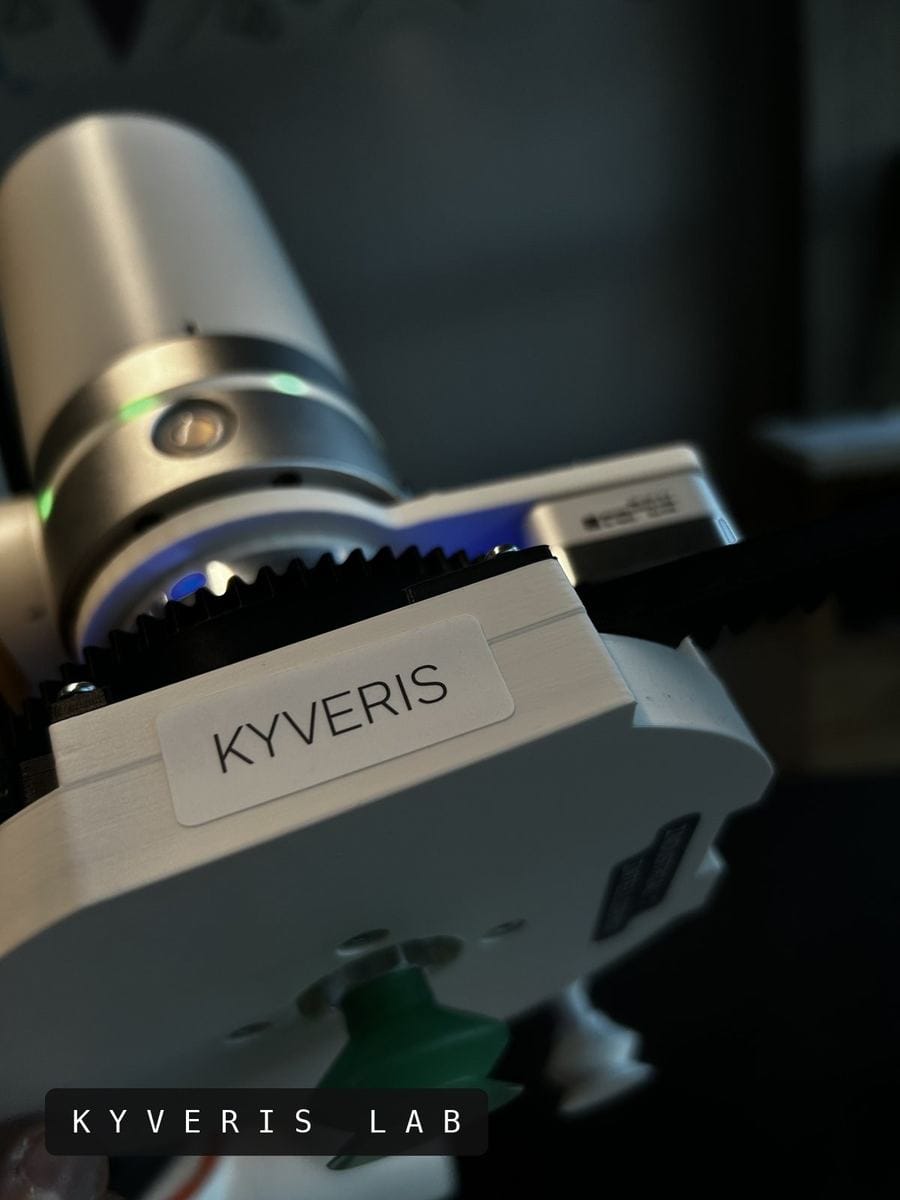
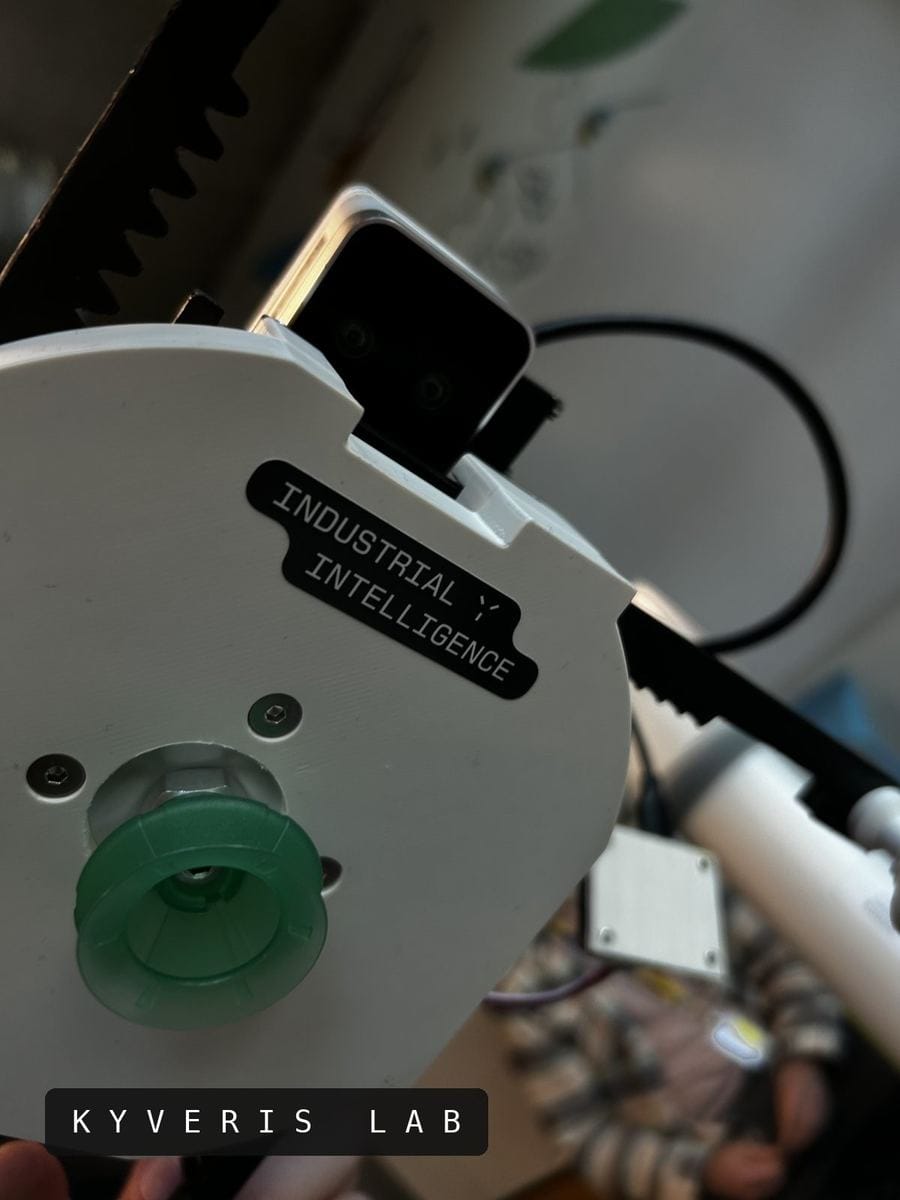
Straight from the Kyveris Lab, on the fly.
Next stop: Brixen
robo.innovate was the first hackathon Durst Group ever took part in. It won’t be the last.
A Grand Prize is a start. Impact comes when this runs in a real print shop. The team is coming to Brixen. Together we will work out the next steps, and how this approach can find its way into our development roadmap and, from there, into production.
Something else stayed with me. Six days earlier, most of these hackers knew nothing about print. They did not know our history, our habits, or why things are done the way they are. That is exactly why they saw what we no longer see.
Our industry needs more of them. Young people who don’t know our challenges yet and are bold enough to start right there. Finding them and encouraging them is our duty.
They encouraged us with what they built in six days. Now it is our turn.
I am one of the young ones at Durst myself. I want more people like these four around me. And a company that is ninety years young wants exactly the same.